







The Engineer’s Blueprint: Mastering the Mechanics and Survival of Poppy Playtime
Poppy Playtime has evolved from a simple viral horror title into a complex, multi-layered puzzle-platformer that demands mechanical precision and acute environmental awareness. To survive the decaying halls of Playtime Co., a player must look past the jumpscares and understand the game as a series of industrial physics problems and predatory AI patterns. This guide provides an exhaustive deep dive into the "How-To" of the franchise, focusing on the technical application of the GrabPack, the optimization of puzzle-solving speed, and the specific evasion tactics required to outmaneuver the factory’s monstrous denizens. Whether you are navigating the claustrophobic vents of Chapter 1 or the massive, non-linear environments of Chapter 3, mastering the horizon of Playtime Co. requires a fundamental shift from a passive observer to an active, mechanical survivor.
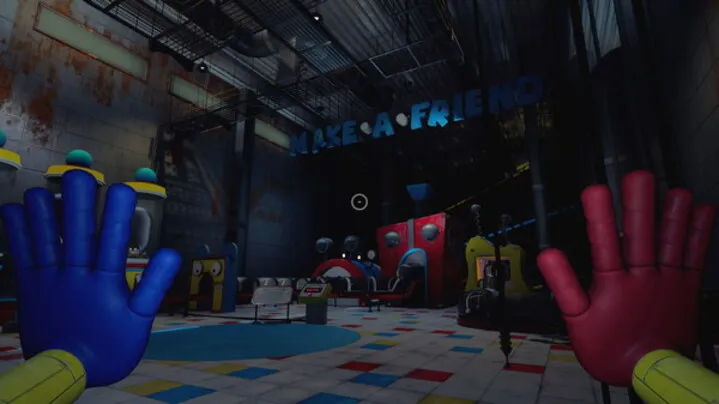
The beauty of Poppy Playtime lies in its tactile interaction with the world. Unlike horror games where you simply hide in lockers, this game requires you to physically manipulate your surroundings using your GrabPack—a tool that serves as your hands, your shield, and your electrical conductor. Success is measured by how quickly you can map out a room’s circuitry while a seven-foot-tall toy breathes down your neck. In the following chapters, we will dissect the technical progression of a master player, moving from basic tethering to high-level survival strategies that define the peak of the Poppy Playtime experience.
1. Mastering the GrabPack: Physics, Tethering, and Range Management

The GrabPack is the heart of the Poppy Playtime experience, and mastering it begins with understanding its "Travel Time" and "Retraction Force." When you fire a hand, it is not an instantaneous hit; there is a projectile velocity involved. In high-pressure situations, such as the Huggy Wuggy vent chase, missing a grapple point by a fraction of a second is fatal. To optimize your usage, you should practice "Pre-Firing"—aiming at where a handle will be rather than where it is—to ensure the hand connects the moment you are in range.
Beyond simple grabbing, the GrabPack serves as a tether for electrical puzzles. The core mechanic here is "Circuit Rerouting." You must act as the bridge between a power source and a receiver. The technical trick is to minimize the "Wire Length" to avoid getting tangled in environmental obstacles. If your wire touches a pole, it creates a node; a master player uses these nodes to create complex geometric paths that avoid the reach of stalking enemies. This spatial reasoning is the difference between a five-minute struggle and a thirty-second solve.
+1
GrabPack Technical Components
- Blue/Red Hands: Standard tactile interaction and weight-bearing.
- Green Hand: Temporary electricity storage; requires precise timing to discharge before the charge dissipates.
- Purple Hand: Impact-based movement; used for jumping large gaps by firing at floor-mounted pads.
- Flare Hand: Used in later chapters for illumination and environmental triggers.
2. Navigating the Electrical Grid: Advanced Puzzle Logic
Electrical puzzles in Playtime Co. become increasingly non-linear as the chapters progress. The "Power Loop" is the most common hurdle, where you must wrap your wire around multiple conductive poles to complete a circuit. The difficulty arises from the "Logic Gate" design—some poles must be hit in a specific sequence, or the circuit will short. To solve these efficiently, you should always locate the "Output" first and work your way backward to the "Input."
In Chapter 2 and 3, the introduction of the Green Hand adds a "Decay Timer" to the puzzles. You must grab a charge, move to a terminal, and discharge it within a few seconds. To maximize your speed, utilize "Horizontal Movement Optimization"—jumping and turning your camera while the hands are retracting to gain a slight speed boost. This allows you to bridge distances that seem impossible under standard walking speeds, effectively "cheating" the timer to solve puzzles from a distance.
3. Huggy Wuggy Evasion: Vent Dynamics and Spatial Cues
The encounter with Huggy Wuggy in Chapter 1 is the game’s first true test of "Pathfinding under Pressure." The vent chase is not scripted to the point of being a movie; the AI has a certain degree of "Catch-Up" logic. If you stop moving, the AI speeds up. The technical key to the vents is "Corner Cutting." By hugging the inside of every turn and avoiding collisions with the pipe walls, you maintain maximum velocity.
Evasion Checklist
- Audio Cues: Listen for the metallic clanging of Huggy's hands; the volume indicates which branch of the vent he is entering.
- Visual Markers: Follow the yellow paint; Playtime Co. uses "In-Universe Wayfinding" to guide players toward the exit.
- The Final Grapple: Do not wait for the prompt at the end of the chase; fire your hands at the box the moment it is visible to trigger the environmental kill.
4. Chapter 2 Survival: Mommy Long Legs and Agility Drills
Mommy Long Legs introduces a "Predatory Search" mechanic, where the player is forced into mini-games under her watchful eye. The "Musical Memory" puzzle is a test of rapid-fire pattern recognition. To succeed at high speeds, you should divide the buttons into quadrants. Instead of memorizing "Blue, Green, Yellow," memorize "Top-Left, Bottom-Right, Top-Right." This spatial mapping bypasses the linguistic delay in your brain, allowing for faster reaction times during the "Fast Phase."
During the "Hide and Seek" segments, you must understand Mommy’s "Vision Cone." Her AI is sensitive to movement and light. The GrabPack wires can actually alert her if they snap against a metal surface. When navigating the industrial rafters, keep your wire retractions short and controlled. If you must move between cover, do so during the "Audio Spikes"—when the factory machinery makes noise—to mask the sound of your footsteps and GrabPack firing.
5. Industrial Stealth: Utilizing the Environment as Cover
Stealth in Poppy Playtime is not about crouching in shadows; it is about "Line of Sight (LoS) Manipulation." Most enemies in the game, particularly the smaller "Mini Huggies" or the "Crawlers," operate on a "Detect and Chase" logic. If you break the LoS for more than three seconds, the AI enters a "Search State" at your last known location. You can exploit this by "Luring"—firing your GrabPack at a distant object to make noise, then moving in the opposite direction while the AI investigates.
Advanced Stealth Tactics
- The "Shadow Dash": Using the Purple Hand to propel yourself across an open area while the enemy is looking away.
- Object Shielding: Carrying a crate or a barrel with the GrabPack to physically block your hitbox from being seen through small gaps.
- Vent Looping: Moving in a circle through connecting pipes to confuse the AI's pathfinding, effectively resetting the chase.
6. The "Wack-a-Wuggy" Strategy: Reflex and Audio Positioning
The Wack-a-Wuggy mini-game is a mechanical gauntlet that tests your "Peripheral Sensitivity." Because the enemies can emerge from 360 degrees, you cannot rely purely on sight. You must use "Stereo Sound Positioning." Wear headphones and listen for the distinct "rustle" of the vents. Each of the 18 holes has a unique sound frequency based on its distance from the player.
To optimize your score, keep your GrabPack hands constantly slightly extended. This reduces the "Travel Time" required to hit a Huggy as it emerges. Instead of fully retracting after every hit, keep the hands hovering in the center of the room. This "Neutral Position" minimizes the distance the hand has to travel to reach any given vent, effectively increasing your reaction speed by up to 15%.
7. Chapter 3: Navigating Non-Linear Environments in Playcare
Playcare represents a massive shift in Poppy Playtime's "Map Flow." It is an open-world hub that requires "Backtracking and Resource Management." You are frequently forced to return to the central gas production zone to switch GrabPack hands. To play efficiently, you must "Route your Upgrades." Don't explore the school or the orphanage randomly; follow the "Utility Path" by securing the Green Hand upgrade first, as it unlocks shortcuts that make the other zones much safer.
The "Red Smoke" mechanic in Chapter 3 adds a survival timer to exploration. You must find gas masks and "Air Filtration Nodes" to survive. This turns the game into a "Stamina Management" horror. Always plan your route from one air node to the next. If you find yourself caught in the smoke without a node nearby, use the "Verticality Hack"—firing your GrabPack at high ceiling pipes and pulling yourself up. The gas is heavier than air and often sits lower to the ground, giving you a few extra seconds of breathing room.
8. CatNap Evasion: Managing the Hallucination Meter

CatNap is a unique antagonist because he attacks your "Perception." His gas causes hallucinations that can lead you into traps. The "Hallucination Meter" is a hidden variable; the longer you stay in the purple haze, the more the environment distorts. To counter this, you must look for "Ground Truths"—static objects that do not move, such as heavy machinery or permanent wall decals. Use these as your navigation markers when the room starts to shift.
During the final CatNap encounter, you must manage the "Boiler Pressure." This is a multitasking challenge where you must fire the GrabPack at steam valves while keeping CatNap at bay with your Flare Hand. The technical trick is "Valve Sequencing." Only turn the valves that are directly in your path to the next Flare recharge station. If you try to turn all of them, you will run out of light and be caught in the dark, where CatNap’s speed is doubled.
9. Speedrunning Tactics: Glitches and Movement Exploits
For those looking to master the game at a professional level, "Sequence Breaking" is the ultimate tool. Many of the game’s triggers are based on "Trigger Volumes"—invisible boxes that the player must walk through to start a cutscene or open a door. In Chapter 1, you can bypass several puzzles by "Prop Hopping"—grabbing a small toy or box, jumping on top of it, and using the GrabPack to pull it upward, effectively creating a mobile elevator to skip locked gates.
High-Level Movement Glitches
- Retraction Clipping: Firing the hand at a corner and retracting while moving against the wall to occasionally clip through thin meshes.
- Hand-Stacking: Rapidly firing and retracting both hands to stay in the air slightly longer than a normal jump allows.
- The "Ledge Warp": Grabbing a ledge at the exact frame of a jump to be pulled up with a velocity boost.
10. The Lore-Gated Secrets: How to Find the VHS Tapes
While not strictly a survival mechanic, finding the VHS tapes is essential for "World Completion." The tapes are often hidden behind "Mechanical Barriers" that require high-level GrabPack maneuvers. For example, some tapes are located on high rafters that can only be reached by a "Purple Jump" followed by an "Electric Tether" mid-air. To find them all, you must treat every room as a 3D platforming puzzle rather than just a horror hallway.
Always look for "Out-of-Place Textures." Playtime Co. often hides secret rooms behind fake walls that have a slightly different sheen than the surrounding brick. Use your hands to "Probe" the walls; if a hand passes through a surface, you've found a secret area. These tapes provide the context needed to understand enemy behavior, often hinting at the "Human Logic" behind the monster AIs, which can help you predict their movement patterns in later chapters.
Conclusion
Mastering Poppy Playtime is a journey of transforming from a victim into an industrial expert. By understanding the physics of the GrabPack, the sequence of the electrical grids, and the specific AI behaviors of Huggy Wuggy, Mommy Long Legs, and CatNap, you can dismantle the factory’s threats with surgical precision. The game rewards curiosity and mechanical skill over brute force. Whether you are cutting corners in the vents or manipulating hallucinations in Playcare, your success depends on your ability to treat the factory as a machine that can be mastered. The horizon of Playtime Co. is dark, but with a firm grip on your GrabPack and a clear understanding of the mechanics, you can thread your way through the nightmare and uncover the truth hidden in the heart of the factory.